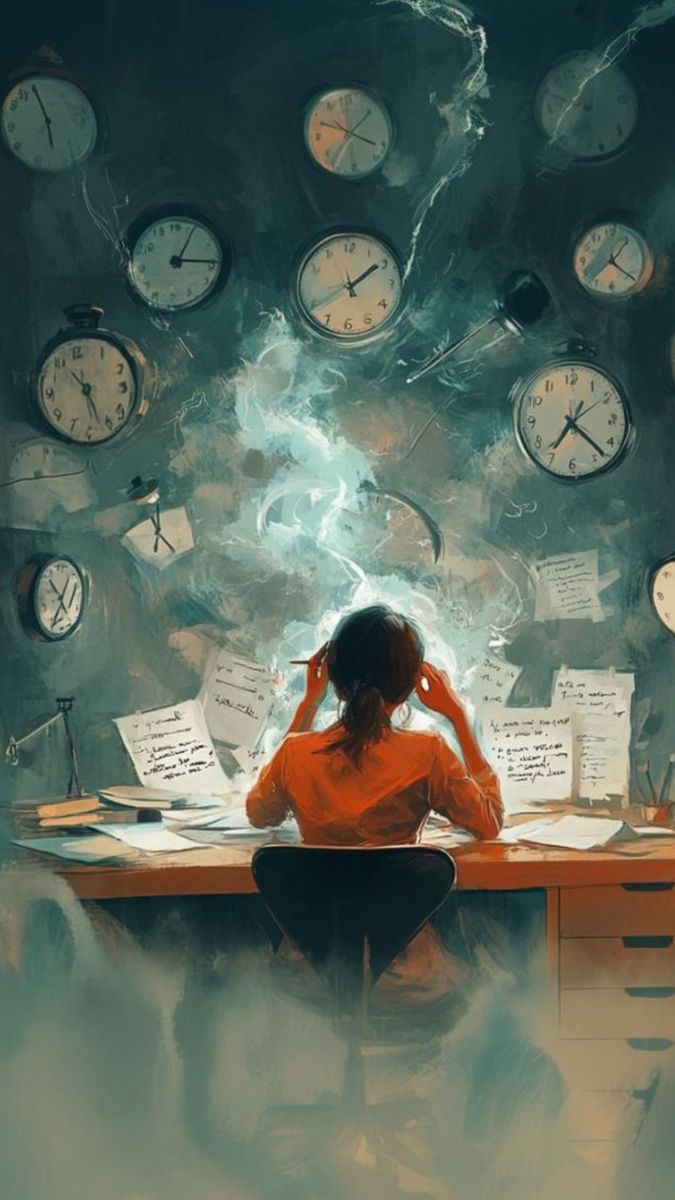
You sit down at your desk at 9 a.m. You check your email. You reply to a few messages. You open a document, notice a notification, check Slack, reply to that too. You glance at the clock: it's 11:30 a.m. You feel exhausted. And you realize — with a creeping sense of dread — that you haven't actually done anything.
This is the fake focus trap. It's more common than burnout, more draining than procrastination, and almost nobody talks about it — because from the outside, and even from the inside, it looks exactly like working.
▶ Watch on YouTube: The Fake Focus Trap — Why Busy Doesn't Mean Focused
What Is Fake Focus?
Fake focus is the state of being mentally engaged without doing cognitively demanding work. You're responding, processing, and reacting — but none of these activities require deep thinking. They feel productive because they involve effort and completion, but they don't move the needle on anything that actually matters.
The problem isn't laziness. It's neuroscience. Your brain is wired to prefer low-effort tasks with frequent small rewards — the dopamine hit from clearing your inbox is real, and it's the same chemical signal your brain gets from finishing meaningful work. The brain doesn't automatically distinguish between them. That's your job.
3 Things Nobody Tells You About Focus
Secret 1: Busyness releases dopamine too. Every time you answer an email, check a notification, or complete a small task, your brain releases a small amount of dopamine. This is why it feels productive. The brain isn't evaluating whether the task was important — it's just rewarding completion. This creates a feedback loop that pulls you toward easy, frequent tasks and away from hard, important ones.
Secret 2: Every interruption costs 23 minutes. Research from the University of California, Irvine found that it takes an average of 23 minutes and 15 seconds to fully return to a task after an interruption. This isn't a rounding error — it's the time your working memory needs to reload the problem context you'd been building. A day with 10 interruptions doesn't just lose 10 minutes. It loses the possibility of deep work entirely.
Secret 3: Multitasking degrades performance every time. The brain doesn't multitask — it task-switches. Each switch carries a "switching cost" that compounds: slightly reduced speed, slightly reduced accuracy, slightly more mental fatigue. Do this repeatedly across a full day, and you've spent enormous cognitive energy moving between tasks rather than going deep on any of them.
5 Ways to Escape the Fake Focus Trap Today
Name your Most Important Task before you open anything
Before you touch your email or any application, write one sentence: "Today I must complete ___." This primes your brain with a clear priority and makes it harder to slip into reactive mode without noticing. Keep that sentence visible throughout the day.
Block 90 minutes of zero-notification time
Phone off, all tabs closed except what you're working on. Tell your team you're unavailable. The world will not end in 90 minutes. What will happen: you'll finish something that would otherwise take three fragmented days. Start with one 90-minute block per day, ideally in the morning before your reactive brain fully wakes up.
Use a consistent focus sound cue
Choose one piece of instrumental music or ambient sound that you only play during deep work sessions. Over time, your brain begins to associate that sound with a focused state — it becomes a conditioned cue, making it faster to reach depth each session. The key is consistency: the same sound, every time.
Batch your low-priority tasks into a single window
Email, Slack, notifications — designate specific times for these (e.g., 10 a.m. and 4 p.m.) and treat them as meetings you attend rather than a stream you monitor. Outside those windows, close the apps. This doesn't make you less responsive; it makes you more productive at everything that actually matters.
Reward real focus, not busyness
At the end of each day, ask yourself: "What deep work did I complete today?" — not "how many tasks did I clear?" This retrains the internal reward system over time. You start feeling satisfied for going deep, not just for staying busy. It's a slow but real shift.

Frequently Asked Questions
Sound designed to condition real focus
Instrumental ambient playlists curated for deep work — the same sound every session, so your brain learns to go deep faster over time.
Explore Moodbeez▶ Watch on YouTube: The Fake Focus Trap — Why Busy Doesn't Mean Focused