
▶ Watch on YouTube: Why Neurodivergent Brains Can't Filter Background Noise
You're in a coffee shop trying to work. The conversation at the next table isn't especially loud. A neurotypical person across the room would barely register it. But for you, it's impossible to ignore — it competes directly with whatever you're trying to read, think about, or write. This is not a concentration problem. It is not a willpower problem. It is a difference in how your brain processes auditory input at a neurological level.
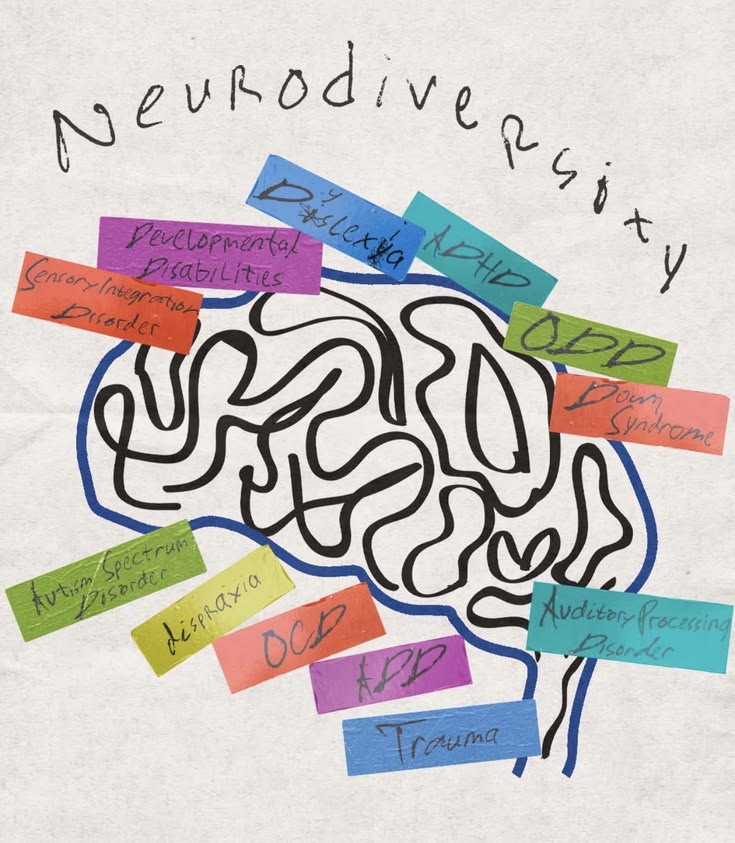
For people with ADHD, autism, or other sensory processing differences, background noise doesn't behave as background. It arrives at near-full cognitive volume, demanding attention that the working brain needs elsewhere. Understanding why this happens — and more importantly, how to use sound strategically to counteract it — can meaningfully change how neurodivergent people design their daily environments.
The Sensory Gating Problem
The mechanism at the core of this difference is called sensory gating — the brain's automatic process of filtering out repeated, irrelevant stimuli before they reach conscious awareness. When a neurotypical brain hears the same sound twice in quick succession, it suppresses the neural response to the second occurrence. The brain essentially flags it: "heard this, irrelevant, moving on." This happens pre-consciously, before the sound even registers as an object of attention.
The technical measure of this is the P50 response — a brainwave that fires about 50 milliseconds after hearing a sound. In neurotypical brains, the P50 is strongly suppressed on the second of two identical sounds (paired-click paradigm). In autistic brains, research consistently shows significantly weaker P50 suppression, meaning the second sound arrives with nearly the same neural intensity as the first. The filter is less effective. What is background to others is foreground to an autistic person's auditory system.
ADHD involves a related but distinct mechanism. Rather than sensory gating alone, ADHD is associated with impaired inhibitory control in the prefrontal cortex — the region that regulates both attention and the suppression of irrelevant input. When inhibitory control is reduced, the brain has less capacity to actively redirect attention away from competing stimuli. The conversational noise in an open office that a neurotypical colleague barely notices keeps pulling at the ADHD brain because it cannot be efficiently deprioritized.

Why Open-Plan Offices Are Particularly Devastating
The open-plan office — designed on the premise that removing walls increases collaboration and creativity — is arguably the most hostile work environment neurodivergent people regularly encounter. The noise profile of a typical open office is exactly the kind that overloads ADHD and autistic sensory systems: unpredictable, speech-dominant, and variable.
Research on noise and cognition shows that variable noise — noise that changes in volume, pitch, and content — is far more disruptive to concentration than steady-state noise. Intelligible speech is especially disruptive because the language-processing regions of the brain automatically attempt to decode spoken words, consuming working memory resources that would otherwise be available for the task at hand. This is true for neurotypical people, but the effect is dramatically amplified when the brain's mechanism for suppressing irrelevant speech input is already less efficient.
The practical result: neurodivergent workers in open offices often report spending substantially more cognitive energy managing their sensory environment than on the actual work. This is not a productivity failure — it's a neurological load distribution problem. The sensory management overhead is real work, consuming real cognitive resources that don't get replenished just by trying harder.
The ADHD Stimulation Paradox
Here's what surprises many people about ADHD and noise: ADHD brains don't simply need less noise. In many cases, they need the right kind of noise — and silence can actually make things worse.
The underlying mechanism is called the stochastic resonance hypothesis. ADHD is characterized by dopamine hypofunction in the prefrontal cortex — a below-normal level of dopaminergic signaling in the regions governing sustained attention. This creates an understimulation condition: the signal-to-noise ratio in the brain's attention system is too low, not because there's too much noise, but because the signal is too weak. Moderate external stimulation can paradoxically improve signal detection by raising the overall arousal baseline in a way that amplifies weak neural signals.
This is why many people with ADHD find they concentrate better with some background noise — music without lyrics, coffee shop hum, or ambient sound — than in complete silence. The brain's attention system is searching for stimulation, and in the absence of adequate external input, it turns inward, generating its own distraction. Background sound that is predictable, non-verbal, and moderately stimulating satisfies that seeking without drawing attention actively toward it.
Building the Right Sound Environment
Given that different neurodivergent profiles have different sensory needs, and individuals vary widely even within those categories, the goal is not finding a universal solution but rather a systematic approach to finding what works for you.
Start with Masking, Not Elimination
For most environments, the goal is not to achieve silence but to replace unpredictable, variable noise with steady, predictable sound. Pink noise (broadband noise with a bass-heavy frequency profile) is particularly effective because its spectral shape is closer to natural sounds and many people find it less harsh than white noise. Played at moderate volume — enough to mask conversational noise but not overwhelming — it converts a variable sensory environment into a stable one.
Match Volume to Profile
For ADHD: research suggests moderate noise around 65–70 dB offers the best cognitive benefit (this is roughly coffee-shop ambient volume). Too quiet fails to provide adequate stimulation; too loud produces sensory overload that degrades performance. For autistic sensory sensitivity: the priority is usually predictability and low harshness over stimulation level, and many people find lower volumes (50–60 dB) with a softer frequency character more sustainable.
Eliminate Speech-Dominant Noise
Whatever background sound you use, the most important thing is that it contains no intelligible speech. Music with lyrics is worse than no music at all for cognitive tasks because the language-processing system automatically decodes spoken words, consuming working memory. Instrumental music without predictable patterns — ambient, classical, or generative sound — is far less likely to pull focus. The moment a song has a hook you can hum along to, it's competing with your thinking.
Protect Transitions and Overstimulation Recovery
Neurodivergent people often need longer decompression periods after high-sensory environments. After a noisy open office, a commute with unpredictable sound, or any high-input social situation, deliberately lowering the sensory load — quiet room, noise-cancelling headphones with only ambient sound or nothing at all — accelerates recovery of the cognitive resources that were consumed managing the sensory environment. This isn't preference. It's maintenance.
Frequently Asked Questions
Sound designed for neurodivergent focus
Moodbeez offers carefully calibrated ambient sounds — no sudden changes, no speech, no melodic hooks — designed to mask variable environmental noise and provide the steady auditory baseline that neurodivergent brains often need to sustain attention.
Explore Moodbeez