
▶ Watch on YouTube: Why Silence Isn't the Best Sleep Environment
The conventional wisdom about sleep and sound goes something like this: quiet room, blackout curtains, no distractions. If you want better sleep, eliminate everything, including noise. This advice is only half right — and for many people, it's actively counterproductive.
The problem isn't sound itself. It's the wrong kind of sound — specifically, irregular and unpredictable sound in an otherwise quiet environment. Understanding why requires a short detour into how your sleeping brain processes the acoustic environment all night long.
Your Brain Doesn't Stop Listening
During sleep, the auditory cortex remains partially active. This is not a design flaw — it's a survival feature. Throughout evolutionary history, a brain that fully suspended auditory monitoring during sleep would not survive contact with predators or threats. So the brain maintains a low-level sentinel process even in deep sleep: continuously sampling the sound environment, classifying inputs as "safe" or "potentially relevant," and either allowing continued sleep or triggering a brief arousal response.
The key variable is acoustic contrast — the difference in amplitude between the ambient background and a sudden sound. In a perfectly quiet room, that contrast is at its maximum. A door closing three rooms away, a car passing outside, a partner shifting in bed — all of these register as sharp acoustic events against silence. The brain's threat-detection circuitry responds accordingly.
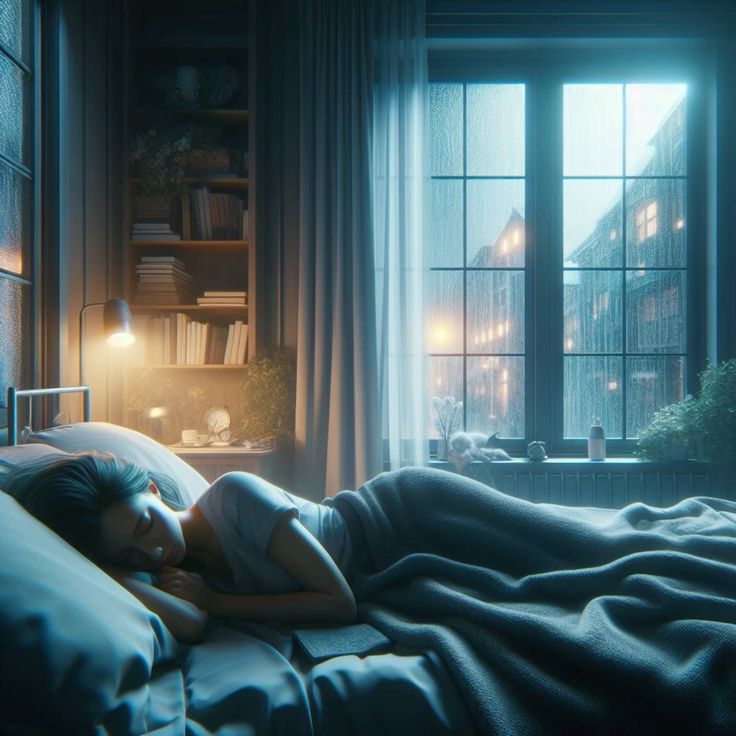
The Micro-Arousal Problem
A micro-arousal is a brief disruption in sleep — typically 3 to 15 seconds — where EEG patterns briefly approach wakefulness before returning to sleep. You almost never consciously remember them. But they are clearly visible in polysomnography, and their effects accumulate through the night.
Even a single micro-arousal can interrupt a slow-wave sleep cycle. The deepest stages of NREM sleep — where memory consolidation, cellular repair, and growth hormone release occur — are particularly vulnerable. Once an arousal occurs, re-entry into N3 (deep slow-wave) sleep can take 10–20 minutes. In a night with frequent micro-arousals, the total time spent in the deepest, most restorative stages can fall dramatically even when total sleep time looks normal on a watch or app.
Research in sleep medicine has documented a direct dose-response relationship: the higher the number of acoustically triggered micro-arousals per hour, the worse the next-day cognitive performance, mood regulation, and subjective sleep quality — regardless of how many total hours were logged. The number of awakenings matters more than the duration of sleep.
Sleep Spindles: The Brain's Built-In Sound Gate
During Stage 2 (N2) sleep, the thalamus generates bursts of neural oscillations called sleep spindles — rhythmic waves in the 11–16 Hz range that appear in EEG recordings as brief, characteristic waxing-and-waning patterns. For decades, sleep researchers treated spindles primarily as markers of sleep depth. More recent work has revealed a more active function: they act as a sensory gating mechanism.
Spindles suppress the relay of sensory information from the thalamus to the cortex. During a spindle burst, the thalamic nuclei responsible for routing acoustic signals effectively lower the gain on incoming sound — the cortex receives a dampened version of any auditory input, making it less likely to reach the threshold that triggers an arousal response. In effect, the brain builds temporary walls against disturbance.
Here is where it becomes practically relevant: studies have shown that exposure to steady background sound — particularly pink noise — correlates with increased sleep spindle density during N2 sleep. The consistent acoustic input appears to prime the spindle-generating mechanism in the thalamus, leading to more frequent and stronger gating activity. The result is a brain that is more, not less, protected from acoustic intrusion when a consistent sound is present.

How Acoustic Masking Works
The principle behind acoustic masking is straightforward: raise the ambient sound floor to reduce the contrast between background and any intruding noise. A sound that would stand out sharply against silence blends into the background when a consistent low-level noise is already present.
Consider a concrete example. In a silent bedroom at 3 AM, a passing motorcycle at 70 dB creates a contrast of roughly 70 dB against the near-silence (around 30 dB). The same motorcycle in a room with a 50 dB broadband background sound creates a contrast of only 20 dB — potentially below the threshold that triggers an arousal response. The motorcycle hasn't changed; the acoustic environment has.
This is why consistent background noise can produce better subjective sleep quality in urban environments, in households with partners who snore or move, and in any setting with unpredictable sound sources. The goal is not to eliminate sound from the brain's awareness but to reduce the signal-to-noise ratio of disruptive sounds.
What Kind of Sound Works Best
The choice of masking sound matters. The ideal acoustic masking agent for sleep has three properties: spectral breadth, temporal consistency, and absence of expectation-generating features.
Pink Noise (Balanced Spectrum)
Pink noise has equal energy per octave — perceived by humans as balanced, natural, and slightly warm. It closely mimics the sound of steady rainfall or a flowing stream. A 2012 study in the Journal of Theoretical Biology found that pink noise synchronized slow-wave brain oscillations and measurably increased N3 sleep time. It masks across a wide frequency range, covering both low-frequency rumbles and mid-range intrusions.
Brown Noise (Bass-Dominant Spectrum)
Brown noise (also called red noise) has more energy in the lower frequencies — deeper and richer than pink noise, comparable to the sound of heavy rain, a strong waterfall, or a running shower. Many people find it subjectively easier to sleep to because the dominant bass register feels less "sharp" than higher-frequency noise. It is particularly effective at masking low-frequency environmental intrusions like traffic and HVAC systems.
What to Avoid
Music with lyrics, rhythmic patterns, or variable dynamics is counterproductive for sleep masking. The brain's language and pattern-recognition systems activate in response to melody and rhythm — the opposite of the passive, low-engagement state you need. Intermittent sounds (set to stop after 30 minutes, for example) can actually produce an arousal when the sound ends, as the sudden change in acoustic environment is itself a contrast event.
The Practical Setup
Volume calibration matters. Acoustic masking is most effective in the 40–55 dB range — roughly the level of a quiet conversation or a running fan. Louder is not better; above 60 dB, background sound starts to add arousal potential rather than reducing it. Set the volume at a level where normal speech is somewhat muffled but not inaudible, and leave it there. Consistent volume throughout the night is important — if you use a speaker with a timer that cuts the sound partway through, the resulting silence can itself become a micro-arousal trigger.
Placement also affects masking efficiency. Sound coming from a single direction is less effective than sound that fills the room. A small speaker on a shelf at head height on the far side of the bed, or a white noise machine positioned between the bed and the door, distributes the masking sound more evenly. The goal is a consistent acoustic bath, not a directional audio source.
Frequently Asked Questions
▶ Watch on YouTube: Why Silence Isn't the Best Sleep Environment
Sleep soundscapes designed for acoustic masking
Moodbeez sleep sounds are engineered for spectral consistency and temporal stability — the properties that reduce acoustic contrast, strengthen sleep spindle activity, and protect deep sleep from environmental intrusion.
Explore Moodbeez