The First 10 Minutes of a Migraine
Decide the Next 10 Hours

▶ Watch on YouTube: The First 10 Minutes of a Migraine Decide the Next 10 Hours
Most people think the important part of a migraine is the pain peak. It isn't. The most decisive part is the beginning, when you are still asking yourself whether it is really starting, whether you can finish the errand, answer the message, sit through one more meeting, or keep looking at the screen just a little longer.
That hesitation is understandable. It is also expensive. A migraine is not only pain. It is a sensory amplification loop. Once the brain is already becoming light-sensitive, sound-sensitive, and cognitively irritable, every extra input becomes a small vote for escalation. The first ten minutes are when subtraction still works best.
Why Pushing Through So Often Backfires
At migraine onset, the nervous system is already becoming less tolerant of normal stimulation. Bright surfaces feel brighter. Conversation takes more effort. Notifications feel sharper than usual. This is not weakness or low pain tolerance. It is the cortex becoming easier to overload while the trigeminal system is already on alert.
If you keep negotiating with the environment instead of changing it, the brain keeps receiving proof that it needs to defend itself. More light, more switching, more decision-making, more noise. The attack deepens not because you failed to be strong, but because the system was still being asked to process too much.
The First Task Is Sensory Subtraction
Many migraine routines are framed as treatment steps: take medication, drink water, get an ice pack, lie down. Those can all matter. But before any of that works well, the environment needs to stop making new demands.
Think of the first ten minutes as building a temporary low-input room around your brain. The goal is not perfect comfort. The goal is fewer variables. Lower the screen brightness immediately or stop looking at it. Reduce sound before you are desperate for silence. Move away from overhead lighting before it starts to feel violent.
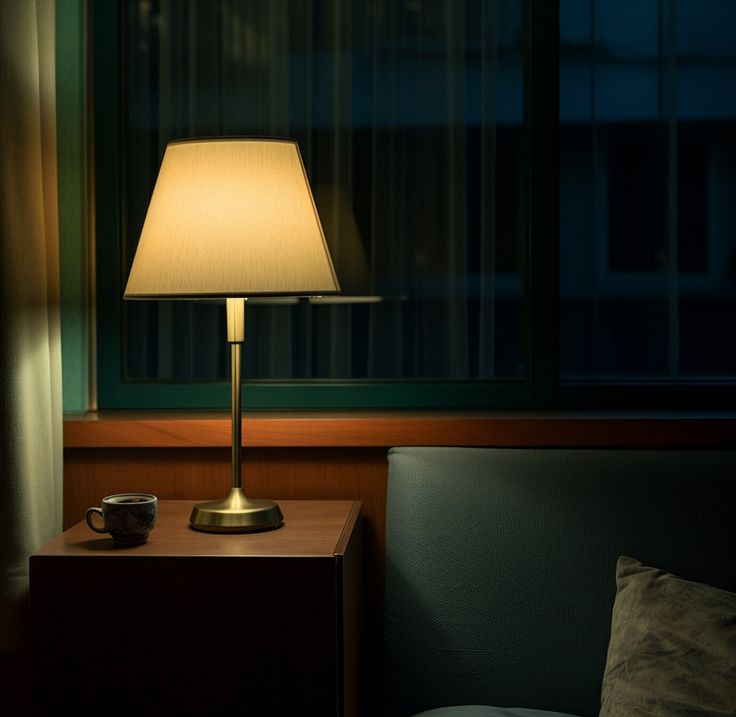
What a Good Migraine Setup Actually Looks Like
Dim One Layer at a Time
Instead of waiting until light feels unbearable, step down early. Close curtains, switch to a single warm lamp, and get reflective surfaces out of your direct field of view. The earlier you reduce brightness, the less cortical irritation accumulates.
Replace Random Sound With Stable Sound
Complete silence sounds ideal until the next dish clatters, door shuts, or phone vibrates. A steady low-frequency sound floor can be easier on a sensitized brain because it removes the shock of contrast. The key is consistency, not volume.
Stop Making the Brain Choose
Decision-making becomes strangely costly at migraine onset. Pre-decide the essentials: water within reach, one cold option, one quiet place, one sound environment. Fewer choices means fewer chances to keep the attack cognitively active.
Why Sound Matters More Than People Expect
Migraine brains are often less bothered by a stable, predictable sound than by abrupt sound against silence. The auditory cortex is already more reactive than usual. What hurts is not always loudness alone. It is surprise, contrast, and irregularity.
That is why a low, even ambient layer can help. Soft rain, brown-noise-like texture, or other non-melodic low-distraction sound gives the brain something steady to classify as non-threatening. It reduces the repeated startle of a room that sounds empty until it suddenly doesn't.

Hydration, Cooling, and Screens
Once the environment is quieter, the usual basics work better. Water helps most when it is early, before nausea or shutdown make it difficult. Cooling the forehead, eyes, or neck can reduce the sense of pressure not because it cures the migraine, but because it lowers the total load the body is interpreting as threat.
Screens are the part people bargain with the longest. The cost is cumulative. Ten more minutes of scrolling or task-switching in the first phase often buys hours of worse sensitivity later. If you need one rule, use this one: the screen should never stay brighter or busier than the room you would willingly recover in.
▶ Watch on YouTube: The First 10 Minutes of a Migraine Decide the Next 10 Hours
Because the early phase is often an amplification phase. The trigeminal system is active, sensory tolerance is dropping, and every extra light, sound, screen, or decision adds to the overall load the brain is already struggling to regulate.
Not necessarily. Many people do better with a stable, low-frequency background sound than with silence interrupted by sharp, unpredictable noises. Consistency is often more important than absolute quiet.
Reduce incoming stimulation immediately: dim light, lower or replace sound, stop unnecessary screen use, and get water and cooling support nearby. The earlier you reduce sensory load, the better the rest of the routine tends to work.
Give the brain a steadier room to recover in
Moodbeez migraine soundscapes are built to replace sharp contrast with a stable low-input floor, so the first minutes of a migraine do not have to be spent fighting the room as well as the pain.
Explore Moodbeez