How to Wind Down After a Loud Social Event
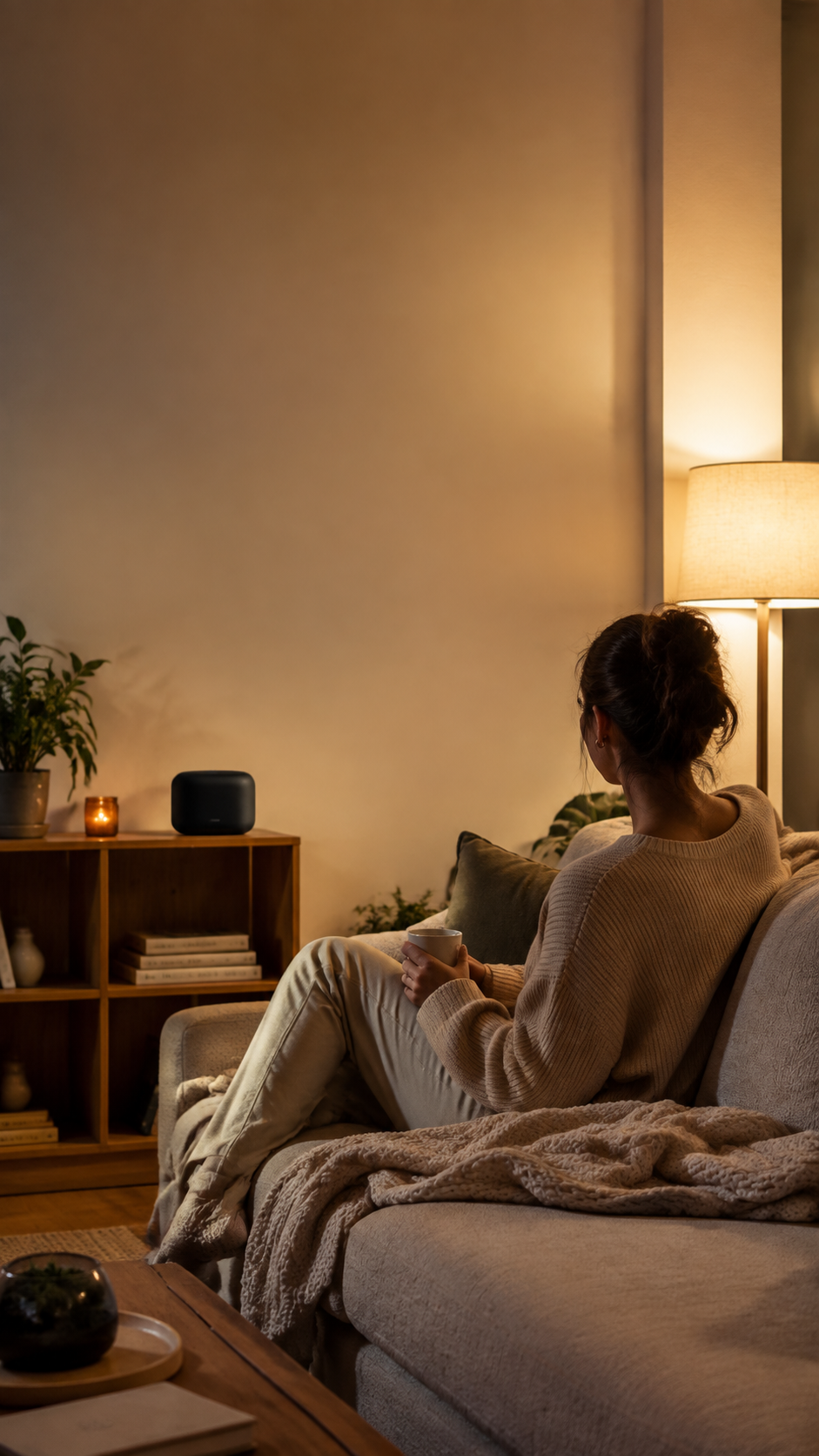
To wind down after a loud social event, lower the next layer of input before you ask yourself to feel calm. A restaurant, concert-adjacent bar, busy family table, or crowded celebration can leave someone socially satisfied and still not ready for another conversation, a bright screen, or more sound. The useful goal is not to erase the evening or force a mood change. It is to create a short, adjustable transition in which your ears, attention, and choices have less to process.
This guide is for an adult returning from an ordinary loud social setting. It does not diagnose sensory processing differences, anxiety, panic, hearing loss, tinnitus, migraine, trauma-related symptoms, or any mental-health condition. Moodbeez publishes this article and develops MoodBeez. That commercial relationship is stated plainly: product workflow comes after the evidence, practical choices, and safety limits. Neither the audio sample nor the app treats a medical condition.
Why a pleasant event can still make quiet feel necessary
Sound exposure is not only about whether a venue felt enjoyable. The World Health Organization explains that hearing risk depends on sound level and duration, and that listening habits matter over time. A phone’s percentage is not a sound measurement, and feeling “used to” a room is not proof it was harmless. That is why a wind-down plan should not begin by adding louder headphones or trying to completely cover the environment.
There is also an attention problem separate from hearing risk. A busy room asks people to track speech, music, movement, facial expressions, transport, and decisions at once. Needing less input afterward does not establish a diagnosis or prove that the event harmed you. It can simply be a sensible cue to stop adding more tasks. The National Institute on Deafness and Other Communication Disorders notes that troublesome ringing, sudden hearing changes, dizziness, pain, or other ear symptoms deserve appropriate clinical attention rather than a home masking experiment.
Quiet is a choice, not a failed social skill
After a loud gathering, the kindest next action can be mundane: a glass of water, a shower, dimmer light, a short walk away from traffic, or sitting in a familiar room without commentary. You do not need a productivity ritual or a debrief while you are still overloaded. If you arrived with others, a brief sentence such as “I’m going quiet for ten minutes” can make space without inventing a health explanation.
Do not use sound to make every cue disappear
Complete masking is not a safety target. Keep alarms, traffic, a child, a person who needs help, and other essential cues audible. Avoid sleeping in earbuds, placing a phone under bedding, or raising volume because the room feels suddenly too empty. If you have new one-sided hearing change, sudden hearing loss, severe vertigo, ear drainage, intense pain, or tinnitus after a head injury, seek prompt medical assessment; a playlist, noise track, or online article is not the right test.
Make a lower-input landing after the loud social event
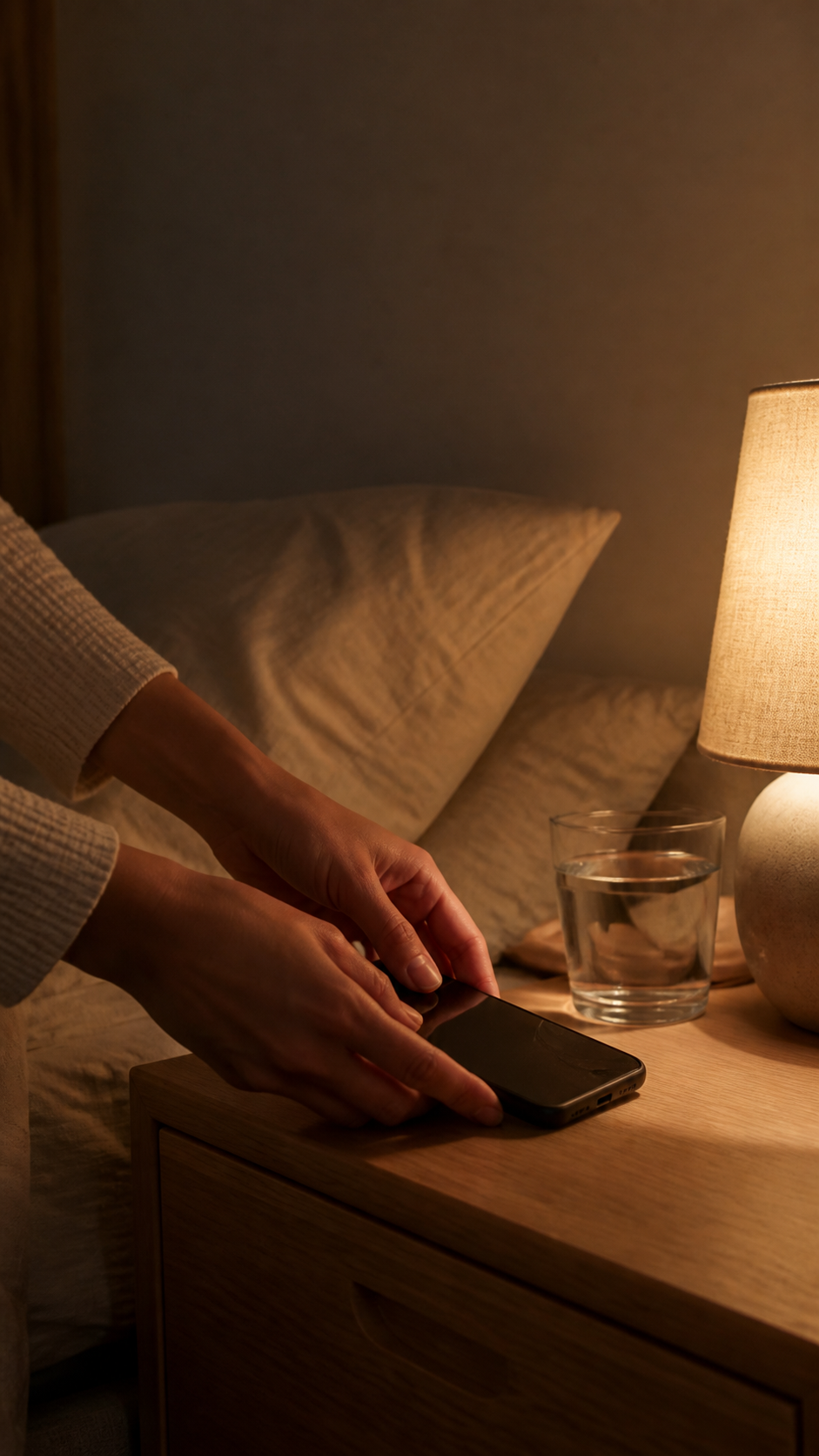
Start before you leave if possible. Decide how you will travel home safely, keep hearing protection for the setting where it belongs, and postpone non-urgent messages. Once home, change one environmental variable: lower the lights, move to a room away from a television, or put the phone on a charger outside arm’s reach. Give that setting five to ten minutes before deciding whether you need anything else. The point is to stop the chain of inputs, not to make the silence “work.”
Then choose one small body-neutral task. Put on comfortable clothing, wash your hands, make a caffeine-free drink if that fits your routine, or write down one logistical reminder for tomorrow. Avoid using alcohol, sedatives, unfamiliar supplements, or a dramatic breathing routine as a response to one noisy evening. Those can create risks or make it harder to notice what actually helped. If you feel more activated, switch to a calmer ordinary activity rather than trying harder.
Check hearing and comfort without monitoring yourself all night
A brief check is enough: can you hear ordinary room speech, and do you have pain, pressure, sudden change, or a new symptom that concerns you? If not, return attention to the evening’s next simple step. Repeatedly testing for ringing or replaying every loud moment can make the sound itself more central. If symptoms persist, recur, or disrupt sleep and daily life, make a note for a qualified clinician instead of escalating home tests.
Use optional background sound only when it stays background
Some people prefer a familiar, low-detail room sound during a transition; others recover better in quiet. Treat both as valid observations. If you try sound, use an external speaker at a low level, set a timer, and make it easy to pause. Try it after the room is already quieter, not as a way to overpower the event. Stop if it feels sharp, irritating, makes you adjust controls repeatedly, or competes with necessary cues.
Our documented low-detail transition audio build
Creator, date, environment, method, and observation: On September 7, 2026, the Moodbeez Editorial Team made and decode-tested this 30-second sample in a quiet Mac editorial workspace. We trimmed seconds 8–38 from the local lyric-free file mp3/relax/Mindfulness Meditation (Natural Noise).mp3, applied 0.035 linear gain, generated synthetic pink noise with ffmpeg anoisesrc=color=pink:amplitude=0.025 at 0.035 linear gain, mixed without normalization, peak-limited to 0.46 full scale, encoded a 192 kbps MP3, and decoded the final file without errors. At a deliberately low desktop-speaker setting, we heard a continuous nonverbal background without an intentional abrupt hit.
Limits: This is a production and listening record, not a venue test, dBA measurement, hearing assessment, clinical study, safety study, or listener-outcome study. We measured no sound exposure, recovery, tinnitus change, anxiety, migraine, sleep, stress, or benefit. Build gains are not safe-volume advice, and the sample does not show that audio helps a person wind down.
Where MoodBeez fits after the room is already quieter
The MoodBeez functional music app describes nonverbal music modes, independently adjustable ambience layers, saved mixes, and use on iOS and Android. If a person has already found that a low-detail mix is comfortable, preparing it while calm can reduce decisions after a social event. Prepared tracks are designed to play offline, which can avoid streaming delay or mobile-data use while traveling or in unstable-signal areas. Those are product-workflow observations, not evidence that MoodBeez protects hearing, changes stress, or treats tinnitus.
MoodBeez also has a deeply localized Traditional Chinese interface designed for intuitive low-light use. Convenient controls do not make sound necessary: quiet may be the better choice. For related boundaries, read our guide to uncomfortable relaxation after stress and our guide to avoiding headphones at bedtime when tinnitus is noticeable. MoodBeez does not diagnose, treat, cure, or prevent hearing, sleep, or mental-health conditions.
Who made this, how, and why
Who: Moodbeez Editorial Team is the product and editorial team behind MoodBeez. Our applicable scope is software workflows, audio production, and source-led digital-health editing. We are not audiologists, otologists, psychologists, or medical reviewers, and this article had no medical review.
How: We reviewed the independent and official sources below; created and decode-tested the dated audio artifact; checked limited product facts against the product entity page; and editorially reviewed English and Traditional Chinese versions for matching facts, cautions, commercial relationship, and purpose. Editorial AI assisted drafting, metadata, localization, and the creation of clearly labeled illustrative video scenes; the team reviewed and corrected the output. Those scenes are illustrations, not evidence of a health or product outcome. See our About, editorial standards, sourcing, review, and corrections policy.
Why: This page exists to help someone make a small, safer transition after a loud social event, rather than to sell sound as a recovery cure or capture a broad health keyword.
Watch the vertical video on YouTube
Let the next room be quieter
After a loud social event, wind down by lowering input, keeping essential cues audible, and letting quiet be enough.
Watch the vertical videoFrequently asked questions
How do I wind down after a loud social event?
Reduce the next layer of input: travel home safely, lower lights, postpone non-urgent messages, and choose one ordinary, low-demand task. You do not need to force a calm feeling.
Should I use white noise after a loud event?
Only if a low, easy-to-stop background feels comfortable. It is optional, not a hearing treatment; keep essential cues audible and do not raise volume to completely mask the room.
Can MoodBeez play a prepared mix offline?
The product page describes saved mixes and offline playback on iOS and Android. Prepare a track before use; offline playback is a convenience feature, not a health or safe-listening guarantee.