How to Check a “Loopable” Sleep Track Before Bed
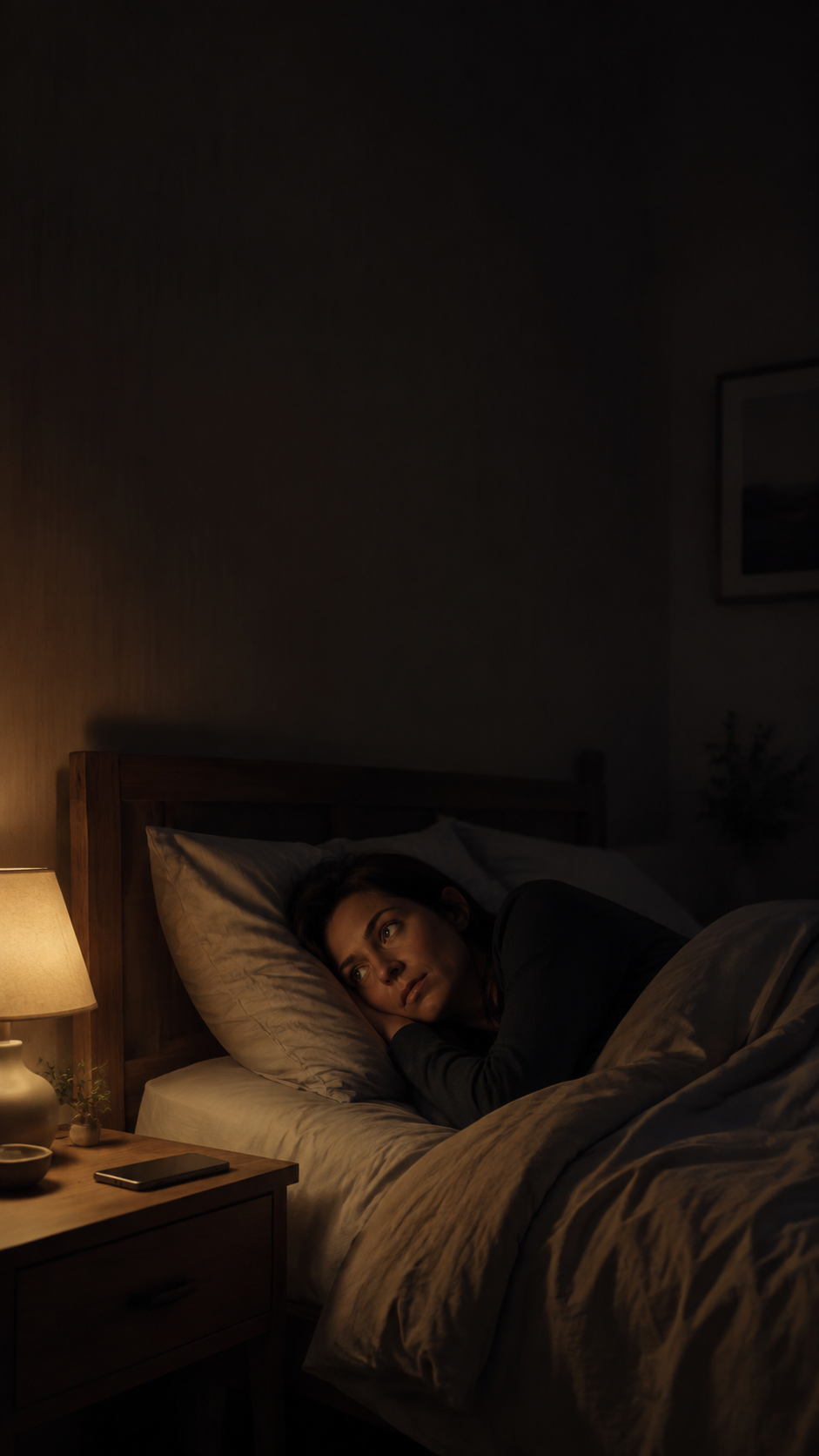
“Loopable” is a useful label, not evidence that a track will suit your room, your ears, or your sleep. Before relying on a track at bedtime, inspect the actual source file, listen briefly at the point where its ending returns to its beginning, and keep the decision reversible. This page records one such inspection of an existing MP3. It does not claim that the file improves sleep, treats insomnia, or is a MoodBeez product.
The source we inspected was the pre-existing file MP3/sleep/Pink Noise - Calming Rain, Loopable.mp3. We did not make, convert, copy, trim, normalize, or publish a new audio file. On September 10, 2026, a Mac command-line metadata read reported a duration of 29.779438 seconds, 44.1 kHz sample rate, two channels, and MP3 audio. Those are technical observations about that source file; they do not measure loudness in a bedroom, listener comfort, sleep onset, awakenings, hearing safety, or any health outcome.
What “loopable” can and cannot mean
A loop is simply a repeated playback transition: the end of a file is followed by its beginning. A filename may reflect the creator’s intention, but it cannot by itself demonstrate a seamless transition on every app, speaker, phone, or browser. Encoders can add tiny delays, playback software can crossfade or gapless-play differently, and a transition that one person ignores may stand out to another. The honest question is not “does the label prove it works?” It is “does this specific playback setup make the boundary unremarkable enough for me to stop attending to it?”
That question deserves a small test while awake. Put the device in the place and on the speaker you would actually use, set a conservative background level, and deliberately listen through one ending-to-starting transition. If you hear a click, a level jump, a change in rain texture, or a musical reset that pulls your attention forward, the file may not be a good bedtime loop for that setup. Do not try to solve the problem by raising volume. Choose quiet or another familiar option instead.
Metadata is a record, not a benefit claim
Duration, sample rate, codec, and channel count help identify a file and make a later inspection reproducible. They cannot tell us whether a sound is relaxing, whether it will mask a safety cue, or whether it supports sleep for a particular listener. Nor do they establish ownership, licensing, medical suitability, or safe volume. We therefore use metadata here only to identify the inspected source and to make clear what was and was not tested.
A name can be informative without being a finding
The words “Pink Noise,” “Calming Rain,” and “Loopable” are part of the filename. We do not convert those words into acoustic, clinical, or product claims. Pink-noise content can vary by file; rain can be steady or dynamic; and a loop can be audible even when it was intended to be smooth. A title is a starting point for inspection, not a substitute for listening or professional advice.
A cautious before-bed check
Begin when you are awake enough to make a simple choice. Play the existing file through an external speaker at a low level. Keep alarms, household calls, caregiving cues, and other safety signals audible. Avoid sleeping in earbuds, and do not use a bedtime listening experiment in a situation where you need to hear a child, a doorbell, a smoke alarm, or an on-call phone. If the setup requires frequent adjustment, it is already asking for more attention than a background sound should.
Listen for the join once or twice, not for an hour. The goal is not to train yourself to tolerate an irritating transition. Notice whether the transition disappears into the background, whether it sounds different, and whether you feel compelled to check the controls. If you are uncertain, the safer conclusion is that this setup has not earned a place in tonight’s routine. Quiet is a complete option.
Why we keep the claim smaller than the evidence
Sleep difficulty can reflect many things: persistent insomnia, breathing problems, pain, medication effects, depression, anxiety, grief, shift work, or an unsafe environment. An MP3 inspection cannot identify or fix any of them. The CDC’s sleep guidance describes sleep as part of health, while the NHLBI’s insomnia information explains when persistent problems merit a conversation with a clinician. Those sources do not turn this source-file record into treatment advice.
If sound is uncomfortable, worsens tinnitus, masks something important, or makes you more alert, stop using it. Seek appropriate clinical or urgent support for concerning symptoms rather than trying to engineer a personal solution from a filename. This article does not offer safe-volume numbers because the output of a speaker depends on the device, distance, setting, and room. “Low enough to remain background and keep cues audible” is a cautious behavior, not a measured safety threshold.

Where MoodBeez fits—and where it does not
MoodBeez is an app for nonverbal music modes, ambience layers, and saved mixes. A prepared mix may reduce the number of decisions needed when someone already knows they want optional background sound. It is not a medical device, a sleep treatment, a hearing-safety tool, or evidence that this independently stored MP3 benefits anyone. The inspected MP3 is not presented here as a MoodBeez output, feature test, or product result.
For related boundaries, see our article on why not to sleep in headphones and our source-led guide to reducing stimulation after a late notification. Moodbeez is this page’s publisher and the developer of MoodBeez; that commercial relationship is disclosed so product context never substitutes for evidence.
Vertical source-inspection video
This short video uses the same dated source-file scope: it shows why a “loopable” label should be checked before bedtime and repeats the limits above. It uses the existing inspected MP3 as background source material and clearly separates it from MoodBeez product claims.
Frequently asked questions
Does “loopable” guarantee a seamless sleep track?
No. It describes an intention or label. Test the ending-to-beginning transition on the actual device and speaker you plan to use.
Does the metadata prove that the MP3 helps sleep?
No. Metadata identifies technical file properties only. It cannot show sleep, hearing, safety, or health outcomes.
Should I use headphones to make a loop quieter?
Not for sleep. Keep sound optional, low, externally played, and unable to mask alarms or care needs; quiet is also a valid choice.